
Tattiana’s Dream and Divination
Eugene OneginThis thread traces Tattiana’s attraction to folk signs and dream interpretation as her uncertain future takes on ominous shape.
increasing Bearing strength in each event
 decreasing
Bearing strength in each eventdecreasingA Superstitious Temperament
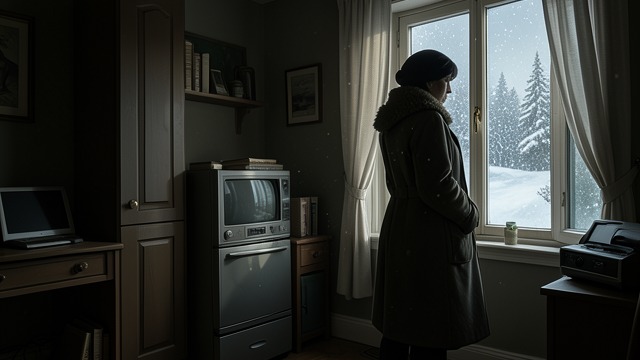
A Superstitious Temperament
Signs in ordinary things
Tattiana believes in dreams, omens, and what the moon may foretell. Small incidents in daily life can seem charged with hidden significance.
Her attentiveness makes uncertainty vivid, especially when she is already anxious about love and the future.
A cultural setting
The household’s winter customs preserve a world of inherited practices and popular beliefs.
These traditions do not determine Tattiana’s decisions, but they give emotional form to her hopes and fears.
The Winter Fortune Telling
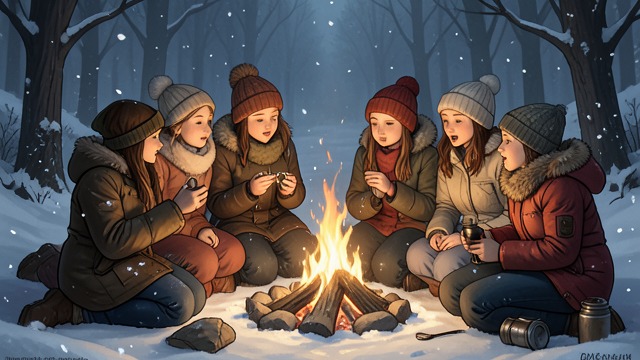
The Winter Fortune Telling
Rituals of prediction
During the winter season, girls use rings, songs, and other customs to seek glimpses of future marriage and fortune. Tattiana participates in the practices that make uncertainty feel answerable.
The traditions combine play with genuine apprehension about what lies ahead.
A threshold of fear
Tattiana’s curiosity leads her toward more private forms of divination, but fear eventually makes her abandon the ritual.
Her retreat sets the stage for a dream that will express what she cannot confidently predict while awake.
A Mirror and a Name
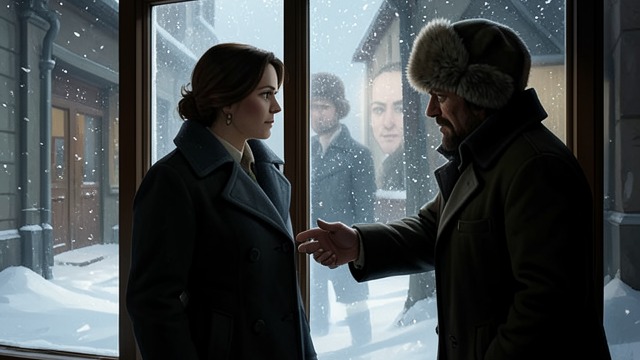
A Mirror and a Name
Searching for a future husband
Tattiana uses a mirror in a winter custom meant to reveal the identity of the man she may marry. She asks a passing worker for his name and receives an answer that surprises her.
The small exchange makes the desire for certainty concrete, though it does not truly reveal her future.
Anticipation without knowledge
The scene mixes comedy with anxiety: Tattiana seeks an answer from a world that cannot guarantee one.
Her next attempt moves from waking ritual into dream, where present fears take a more dramatic form.
The Bear and the Crossing
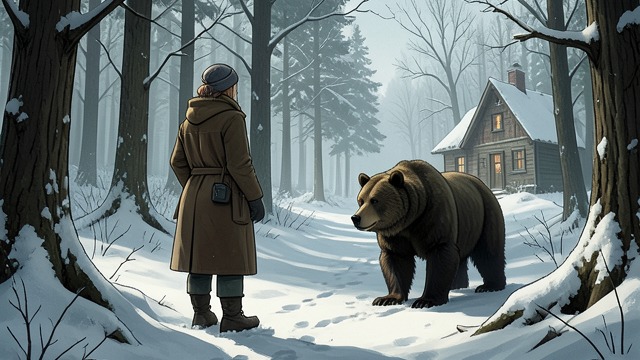
The Bear and the Crossing
A dangerous passage
Tattiana dreams of a snowbound landscape and a perilous stream. A bear helps her across, then pursues her through the forest.
The dream turns her desire for guidance into a scene of dependence and fear.
An uncertain refuge
The bear carries Tattiana to a strange hut, where Eugene presides among monstrous figures. The dream joins attraction to danger and social unease.
Its images foreshadow conflict without functioning as a simple, reliable prediction.
The Dream’s Fulfillment
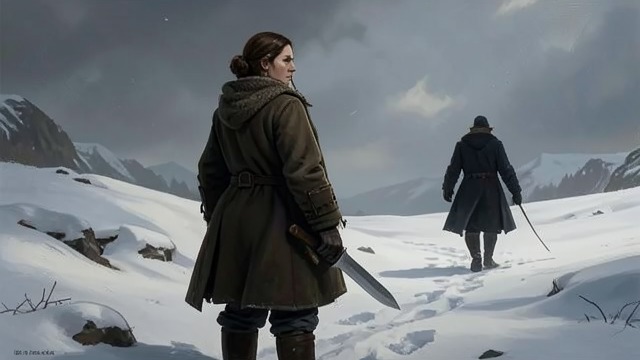
The Dream’s Fulfillment
A remembered vision
In the dream, Eugene kills Lensky with a knife. Tattiana wakes disturbed, but cannot find a clear interpretation in her fortune-telling book.
The image remains a source of dread rather than a settled prophecy.
Reality and resemblance
Later, Eugene kills Lensky in a duel, and the dream’s central image appears to anticipate the death.
The echo strengthens the poem’s interest in fate while leaving open how much was foreknowledge and how much was imaginative fear.
during Tattiana’s rural youth
during the Holy Nights before the dream
on a frosty night during the Holy Nights
during Tattiana’s winter dream
at the duel that follows the name-day fête
